This is a list of cases reported in volume 149 of United States Reports, decided by the Supreme Court of the United States in 1893.
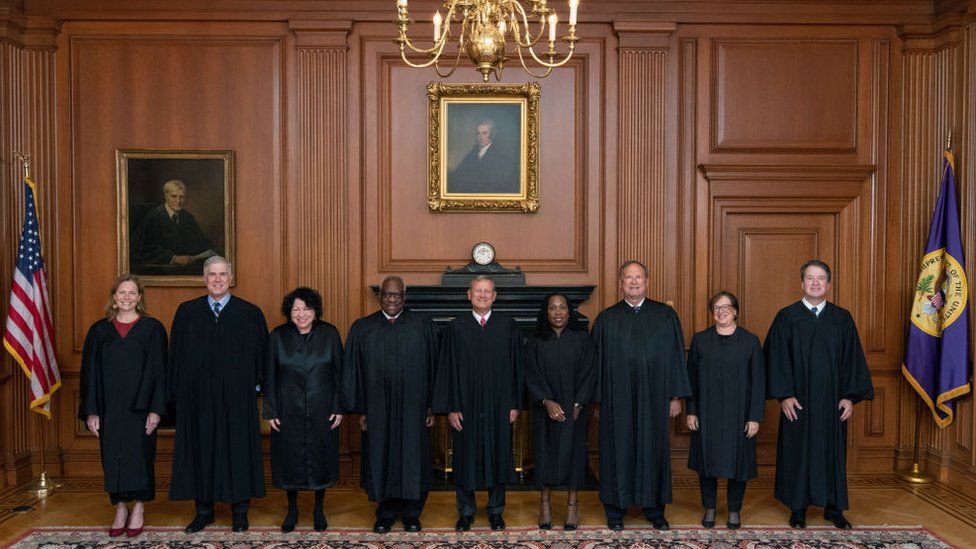
Justices of the Supreme Court at the time of volume 149 U.S.
The Supreme Court is established by Article III, Section 1 of the Constitution of the United States, which says: "The judicial Power of the United States, shall be vested in one supreme Court . . .". The size of the Court is not specified; the Constitution leaves it to Congress to set the number of justices. Under the Judiciary Act of 1789 Congress originally fixed the number of justices at six (one chief justice and five associate justices). Since 1789 Congress has varied the size of the Court from six to seven, nine, ten, and back to nine justices (always including one chief justice).
When the cases in volume 149 U.S. were decided the Court comprised the following nine members:
Notable Cases in 149 U.S.
Nix v. Hedden
In Nix v. Hedden, 149 U.S. 304 (1893), the Supreme Court held that under U.S. customs regulations, a tomato should be classified as a vegetable rather than a fruit; the Tariff Act of 1883 used the ordinary meaning of the words "fruit" and "vegetable," instead of the technical botanical meaning.
Fong Yue Ting v. United States
Fong Yue Ting v. United States, |149 U.S. 698 (1893), is a decision challenging provisions in Section 6 of the Geary Act of 1892 that extended and amended the Chinese Exclusion Act of 1882. The provisions in question required Chinese in the United States to obtain certificates of residency, and allowed for the arrest and deportation of Chinese who had failed to obtain these certificates, even if they had not violated any other laws. The case involved writs of habeas corpus from Fong Yue Ting and two other Chinese citizens residing in New York City who were arrested and detained for not having certificates. The Supreme Court decided in favor of the United States government, upholding the Geary Act and denying the writs of habeas corpus.
Citation style
Under the Judiciary Act of 1789 the federal court structure at the time comprised District Courts, which had general trial jurisdiction; Circuit Courts, which had mixed trial and appellate (from the US District Courts) jurisdiction; and the United States Supreme Court, which had appellate jurisdiction over the federal District and Circuit courts—and for certain issues over state courts. The Supreme Court also had limited original jurisdiction (i.e., in which cases could be filed directly with the Supreme Court without first having been heard by a lower federal or state court). There were one or more federal District Courts and/or Circuit Courts in each state, territory, or other geographical region.
The Judiciary Act of 1891 created the United States Courts of Appeals and reassigned the jurisdiction of most routine appeals from the district and circuit courts to these appellate courts. The Act created nine new courts that were originally known as the "United States Circuit Courts of Appeals." The new courts had jurisdiction over most appeals of lower court decisions. The Supreme Court could review either legal issues that a court of appeals certified or decisions of court of appeals by writ of certiorari.
Bluebook citation style is used for case names, citations, and jurisdictions.
- "# Cir." = United States Court of Appeals
- e.g., "3d Cir." = United States Court of Appeals for the Third Circuit
- "C.C.D." = United States Circuit Court for the District of . . .
- e.g.,"C.C.D.N.J." = United States Circuit Court for the District of New Jersey
- "D." = United States District Court for the District of . . .
- e.g.,"D. Mass." = United States District Court for the District of Massachusetts
- "E." = Eastern; "M." = Middle; "N." = Northern; "S." = Southern; "W." = Western
- e.g.,"C.C.S.D.N.Y." = United States Circuit Court for the Southern District of New York
- e.g.,"M.D. Ala." = United States District Court for the Middle District of Alabama
- "Ct. Cl." = United States Court of Claims
- The abbreviation of a state's name alone indicates the highest appellate court in that state's judiciary at the time.
- e.g.,"Pa." = Supreme Court of Pennsylvania
- e.g.,"Me." = Supreme Judicial Court of Maine
List of cases in volume 149 U.S.
Notes and references
External links
- [1] Case reports in volume 149 from Library of Congress
- [2] Case reports in volume 149 from Court Listener
- [3] Case reports in volume 149 from the Caselaw Access Project of Harvard Law School
- [4] Case reports in volume 149 from Google Scholar
- [5] Case reports in volume 149 from Justia
- [6] Case reports in volume 149 from Open Jurist
- Website of the United States Supreme Court
- United States Courts website about the Supreme Court
- National Archives, Records of the Supreme Court of the United States
- American Bar Association, How Does the Supreme Court Work?
- The Supreme Court Historical Society